An industrial heritage site hidden in the woods
Diga del Muraglione
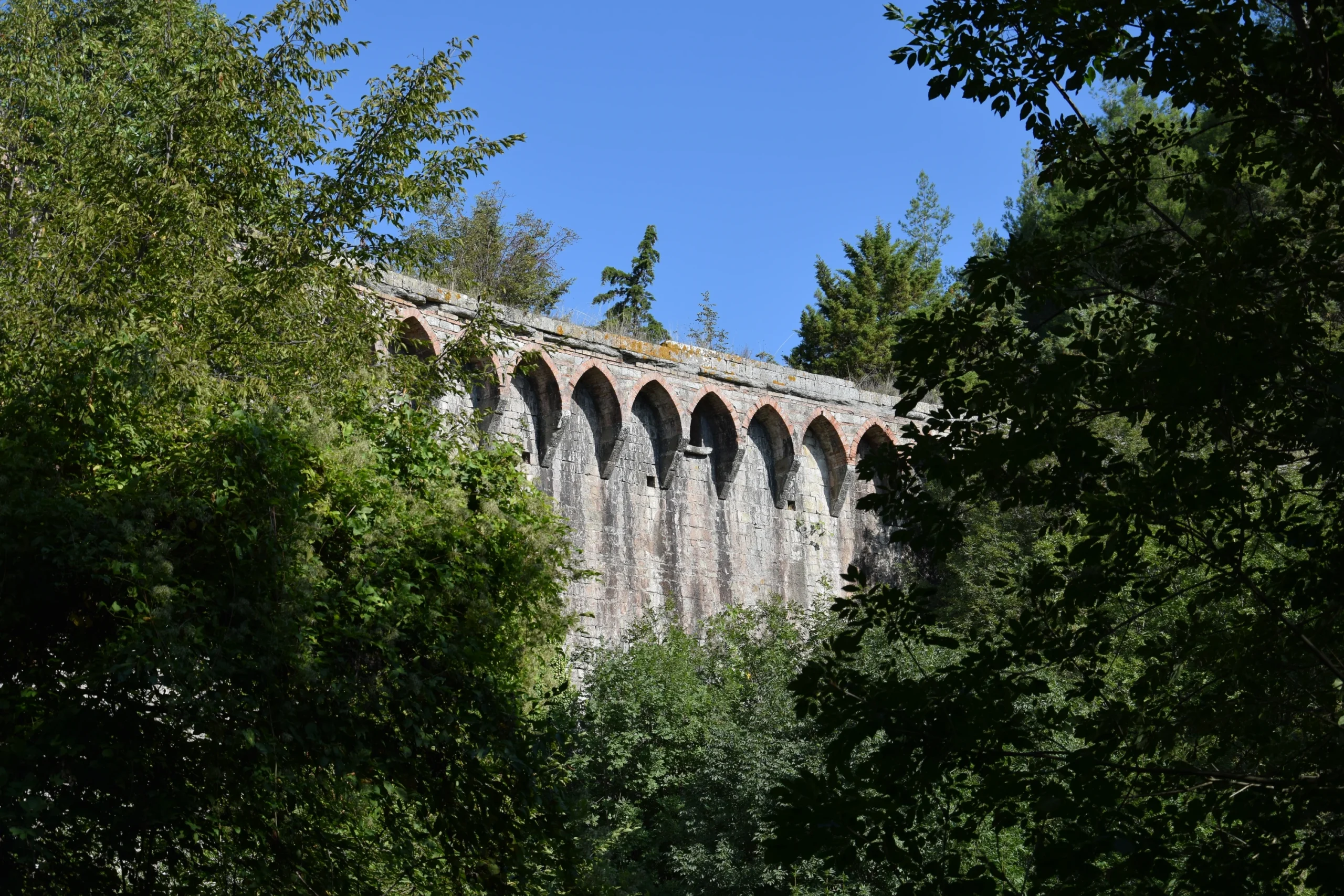
An industrial heritage site hidden in the woods
The Muraglione Dam is one of the most fascinating examples of nineteenth-century industrial archaeology in Tuscany, built in 1884 as a water reservoir for washing the copper extracted from the nearby Caporciano mine. The structure is located in a wooded area on the slopes of Monte Massi, at about 500 metres above sea level and roughly 500 metres from the mining settlement, and is listed in the Italian Dams Register under number 1810. It is a masonry dam with two outer faces that gradually decrease in thickness from bottom to top, and a central “bag” core made of stone rubble mixed with earth, founded directly on the rocky substrate.
The dam’s history is emblematic of the technological limits of the time: the available techniques did not allow engineers to properly assess the permeability of the ground, and the reservoir was unable to hold water effectively, so it was almost never used. A second reservoir, called the Margone, was later built downstream on clay-rich, impermeable ground and served the original purpose instead. Abandoned for decades and completely reclaimed by the forest, the dam was acquired by the Municipality of Montecatini Val di Cecina in 2000, together with the entire mining area, and is now being restored as part of the future Mining Museum.
